
Why a small exterior faucet can create a large interior leak
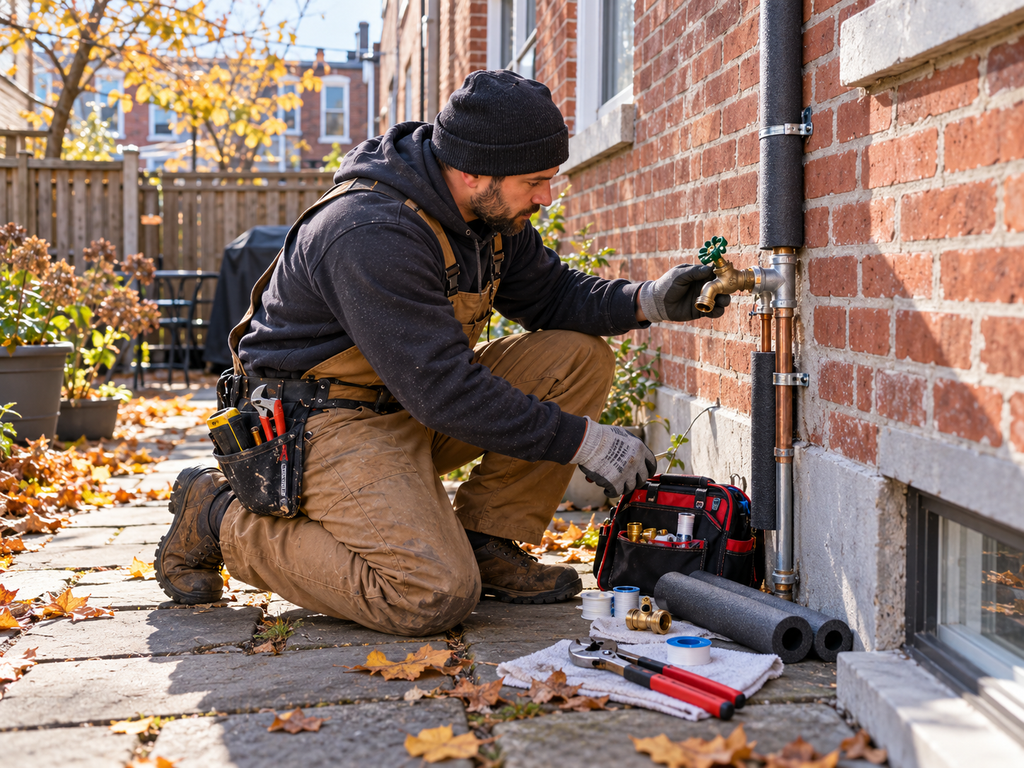
Outdoor faucets are easy to forget because they may not be used after summer. The risk appears when water remains trapped in a hose, hose bib, or exposed pipe and temperatures drop below freezing. Expanding ice can damage the fixture or split piping inside the wall, and the leak may not become obvious until the line thaws.
Philadelphia homes vary widely. Some rowhomes have rear hose bibs connected through a warm basement; others have exposed piping in unconditioned additions, garages, crawlspaces, or exterior wall cavities. Main Line and Ardmore properties may have multiple outdoor faucets, irrigation connections, or utility sinks. Winter preparation should match the actual plumbing layout rather than rely on one generic step.
Disconnect hoses, splitters, and accessories
The simplest first step is also one of the most important: remove garden hoses, Y-splitters, timers, spray nozzles, and quick-connect fittings from exterior faucets. A hose left attached can hold water against the valve and prevent the faucet assembly from draining as intended.
After accessories are removed, inspect the faucet for dripping, loose handles, corrosion, cracked vacuum breakers, or movement where the fixture enters the wall. A slow drip matters because it continually replenishes water that can freeze in the exposed portion of the assembly.
Know whether the faucet is frost-resistant
Frost-resistant hose bibs are designed so the shutoff point sits farther inside the building where temperatures are warmer. They work only when installed with the correct slope and when the hose is disconnected so water can drain from the outer barrel. A frost-resistant faucet that is improperly pitched, leaking internally, or connected to a trapped hose can still be damaged.
Older homes may have conventional hose bibs with an interior shutoff valve. When that configuration exists, winterization may include closing the interior valve and draining the short exterior branch. The location and condition of that shutoff should be verified before relying on it for winter protection.
Inspect exposed pipe in basements, crawlspaces, and rear additions
Exterior faucets are not the only concern. Pipes in unheated basements, drafty crawlspaces, enclosed porches, rear additions, and near foundation vents may be exposed to colder air than the rest of the plumbing system. Insulation can help, but it should not be used to conceal an active leak, badly corroded pipe, or a section that is already inadequately supported.
Air leaks also matter. Cold air entering around a pipe penetration can chill a short section of plumbing even when the surrounding room feels relatively warm. Sealing exterior gaps around penetrations and improving local insulation may reduce that exposure, provided the work does not interfere with required drainage or service access.
Do not wait for the first freeze to discover a weak shutoff
If an interior valve does not close fully, the faucet keeps dripping after winterization, or the exterior fixture is damaged, repair is easier before a cold-weather emergency. This is also the time to identify whether an old multi-turn valve should be serviced or replaced, whether corroded piping needs attention, and whether the exterior faucet should be upgraded.
Philadelphia Plumbing Experts lists outdoor plumbing system repair as part of its service scope. A fall inspection can focus on the components most likely to be exposed, while keeping the rest of the plumbing system in service.
What to do if a pipe freezes
If water flow stops during freezing weather, do not use an open flame to heat the pipe. Shut off water if there is evidence of a split or active leak, protect the surrounding area, and arrange professional evaluation. A frozen section may already be damaged even if water is not yet visible.
Preparing outdoor faucets in October is simpler than responding to a burst line during a cold snap. Philadelphia Plumbing Experts can help inspect exterior faucets, exposed piping, shutoff valves, and outdoor plumbing connections before winter weather arrives.
Frequently Asked Questions
Should I leave a hose connected during winter?
No. Disconnecting hoses and accessories helps exterior faucets drain as designed and reduces trapped water at the fixture.
Do frost-free faucets need winter preparation?
They still need the hose removed and should be checked for leaks, improper pitch, or damage.
What should I do if a pipe freezes?
Avoid open flames. Shut off water if damage is suspected and arrange professional evaluation, especially if the pipe is concealed or leaking.