
Every winter, plumbers across Philadelphia take the same emergency calls: no water at the kitchen sink on a January morning, a burst pipe in an unheated rear addition, or water pouring from a basement ceiling after a cold snap. Rowhomes and older twins are especially vulnerable because plumbing often runs along exterior walls, through crawl spaces, or into rear kitchens built over unheated additions.
Late October and November are the right time to prepare. A few hours of prevention costs far less than drying out walls, replacing flooring, and repairing a burst line.
1. Identify the Pipes Most at Risk
- Exterior Wall Plumbing: Kitchen sinks on outside walls, especially in rear additions with little insulation.
- Hose Bibs (Outdoor Faucets): Standard sillcocks that are not frost-free freeze easily if not shut off and drained.
- Basement and Crawl Space Lines: Pipes near basement windows, foundation vents, or rim joists exposed to cold air.
- Vacant or Rental Units: Properties between tenants where heat is turned down or off.
2. Fall Freeze-Prevention Checklist
Before the First Freeze:
- Shut Off and Drain Outdoor Faucets: Close the interior valve that feeds each hose bib, open the outside faucet to drain it, and disconnect garden hoses.
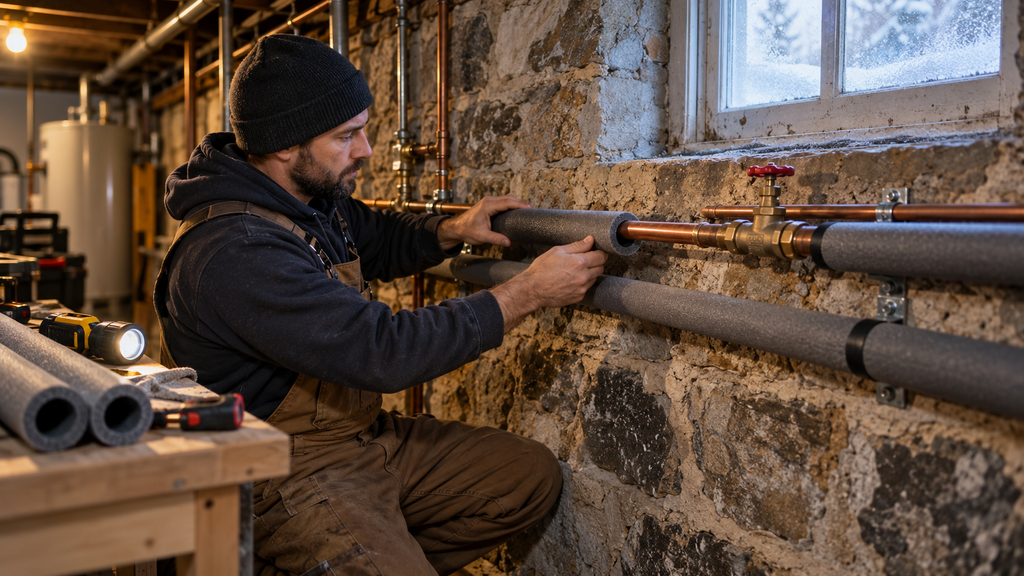
- Insulate Exposed Pipes: Use foam pipe insulation on lines in basements, crawl spaces, and unheated areas. Seal air leaks around rim joists and pipe penetrations.
- Keep the Heat On: Maintain the thermostat at 55°F or higher, even when traveling. Open cabinet doors under sinks on exterior walls during extreme cold.
- Know Your Main Shutoff: Make sure every adult in the home knows where the main water shutoff valve is and that it turns freely.
3. Long-Term Upgrades
For homes with recurring freeze problems, permanent fixes are worth considering: replacing standard outdoor faucets with frost-free sillcocks, rerouting supply lines away from exterior walls during a remodel, adding insulation to rear additions, and installing heat cable rated for pipe protection where rerouting is not possible.
4. If a Pipe Freezes
If a faucet produces only a trickle in cold weather, a pipe may be frozen. Keep the faucet open, apply gentle heat with a hair dryer or space heater kept at a safe distance, and never use an open flame. If a pipe bursts, shut off the main water valve immediately and call a licensed plumber. The Philadelphia Water Department also provides guidance on protecting water service lines and meters during winter.
Preparing now helps you avoid one of the most expensive winter repairs. Explore our plumbing services to schedule a winter plumbing inspection with Philadelphia Plumbing Experts.