
An ice maker hookup may need its own appointment if you’re putting a refrigerator with an ice maker into a spot that never had water. In a Point Breeze or East Passyunk rowhome, the refrigerator opening might be across a narrow kitchen from the nearest cold water supply. Knowing that before delivery gives you time to plan a route that stays out of the way.
One customer who hired Philadelphia Plumbing Experts for an installation praised the crew’s professionalism. Clear planning is just as useful on a small hookup: the plumber can explain where the tubing will run, where you’ll reach the connection, and what the appliance installer needs on delivery day.
Plan the ice maker hookup before delivery
The tubing that serves an ice maker carries cold drinking water. It’s separate from the refrigerator’s electrical cord and any line serving the dishwasher. The supply may come from a nearby cabinet or through an accessible basement ceiling. In a rowhome with finished ceilings, the short path on a floor plan can be harder to reach than a slightly longer route through cabinets.
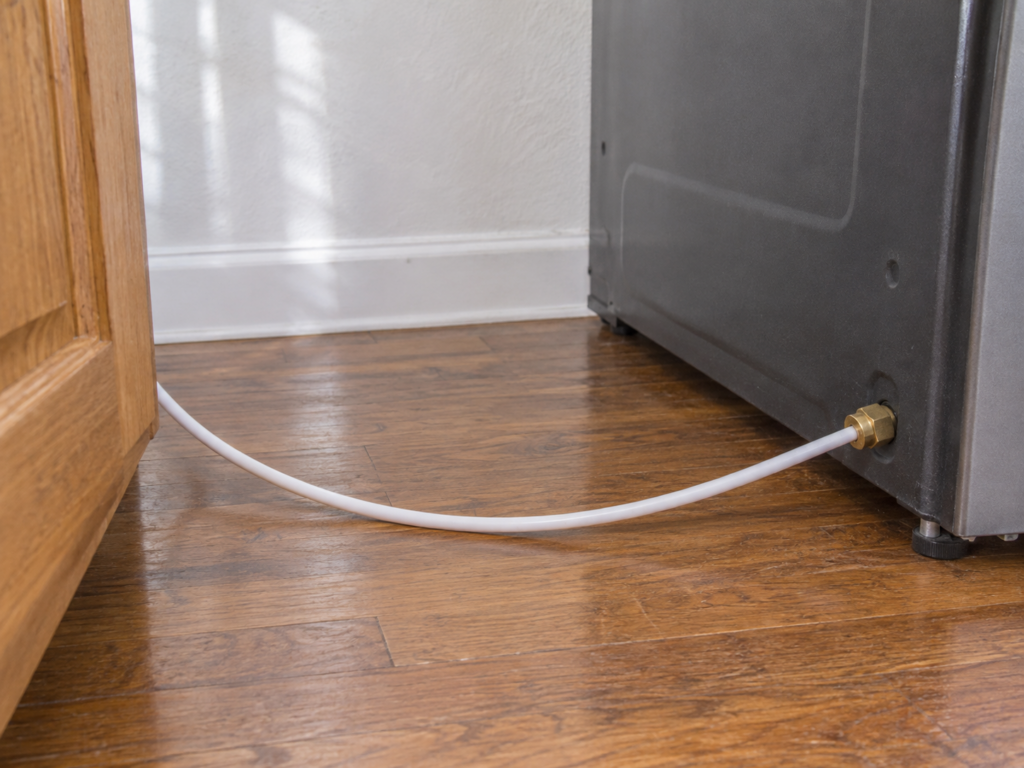
Space behind the appliance matters too. A tight bend or a line pinched by a leveling foot can restrict flow. The installer should leave room for a broad bend and enough slack to pull the refrigerator forward for service. This GE Appliances installation guide illustrates why service slack matters. Use the guide for your exact model to check its fittings, clearance, and allowable tubing.
What a plumber checks for an ice maker hookup
A plumber looks at the refrigerator’s installation guide and the kitchen together. This helps separate the plumbing work from delivery, electrical work, and cabinet changes. It also helps you avoid assuming a capped tube in the old refrigerator opening is ready to reuse.
- Cold water source. Identify where the existing drinking water supply can serve the new line and how the connection will remain accessible.
- Tubing route. Look for a path that avoids drawer slides, sharp cabinet edges, hot surfaces, and areas where screws could hit the tubing.
- Appliance clearance. Mark the location of the inlet, cord, and leveling feet. Make sure the refrigerator can sit at the required depth without compressing the line.
- Service access. Ask for a photo of the route before it disappears behind the appliance. After connecting the refrigerator, verify operation according to the appliance instructions.
Targeted repair vs. full line replacement
A targeted repair may make sense if the route is sound and an accessible connection needs adaptation for the new model. The plumber should confirm the existing material is approved for the appliance and inspect the visible line before reusing it. A short, accessible run that simply reaches the wrong side of the opening may be easier to adjust than a concealed line.
A full line replacement makes more sense if the tubing is crushed, too short for service, or impossible to trace. If you’re moving the refrigerator, a new route may be cleaner than extending the old line through several cabinets. Ask where each connection will sit after the refrigerator slides into place and how the next technician will reach it.
What to check without moving the refrigerator
Write down the model number and measure the opening at its narrowest points. Note whether the countertop or a baseboard projects into that space. If the line is already visible from an open cabinet, take a photo of where it enters. Don’t pull a heavy refrigerator out alone or tug on disconnected tubing.
If water flow stops after an appliance swap, tell the installer whether both the dispenser and ice maker are affected. That detail can help them decide whether to look at the shared supply or at the appliance settings.
Frequently asked questions
Do all refrigerators need a water hookup? No. A refrigerator without a plumbed ice maker or water dispenser doesn’t need a line. Check the exact model, even if it looks similar to the one next to it in the showroom.
Can I keep the line that served my old refrigerator? Sometimes. It depends on its condition, length, and compatibility with the new appliance. Have the installer check the available clearance before reusing it.
Should the line go in before the refrigerator arrives? If there’s no existing connection, book the plumbing work first when possible. Give the plumber the model specifications and the final cabinet layout.
Schedule a refrigerator water line assessment
Explore our plumbing installation services and fixture and connection services. Then contact Philadelphia Plumbing Experts with your model number, opening measurements, and delivery date so we can help you plan the connection.