
Boiler repair calls pick up fast in Philadelphia once nights turn cold. Many rowhomes in South Philly, Fishtown and Germantown still heat with hot water boilers and radiators.
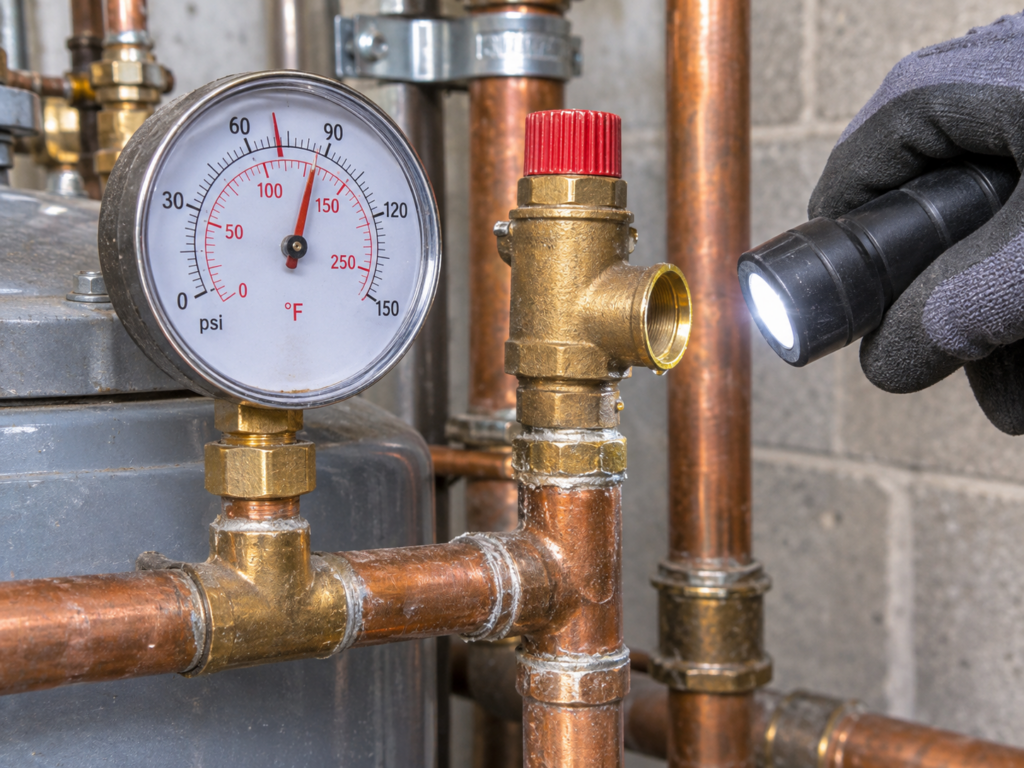
Customers often ask us to explain what we found. So we photograph gauges, valves and leaks before we start.
Why Boilers Need Repair in Older Philadelphia Homes
Hot water systems are simple, but parts wear out. ENERGY STAR notes that regular service helps boilers run safely and efficiently.
- Low pressure. Small leaks let system pressure fall below 12 psi.
- Air in the lines. Trapped air keeps upper radiators cold.
- Failed parts. Circulator pumps, valves and expansion tanks wear out.
What a Boiler Repair Visit Checks
We record readings before and after the repair. As a result, you know exactly what changed.
- Pressure and temperature gauge readings.
- Relief valve, expansion tank and fill valve.
- Circulator pump and zone valves.
- Visible leaks at radiators and pipe joints.
Boiler Repair or Boiler Replacement?
A targeted repair makes sense when the boiler is under 20 years old and one part failed. Instead, a replacement makes sense when the heat exchanger leaks or repairs keep stacking up.
Warning Signs Your Boiler Needs Repair
- Radiators that stay cold on upper floors.
- A gauge reading that keeps dropping.
- Water under the boiler or relief valve.
- Banging or gurgling in the pipes.
Frequently Asked Questions
Should I bleed my radiators? Yes, if they are cold at the top. Call us if it keeps happening.
What pressure should my boiler show? Usually 12 to 15 psi when cold in a two-story home.
Can you fix a leaking radiator valve? Yes. Many valves can be repacked or replaced in one visit.
Schedule Boiler Repair Today
See our plumbing installations, our fixture and repair services, or contact our plumbers to book a visit.