
A garbage disposal makes kitchen cleanup faster and keeps food scraps out of the trash. Yet in older homes, the drain line below the sink decides whether it works well.
We install units in Fishtown, Point Breeze and Manayunk, where many kitchens still drain through old cast iron pipes.
Choosing the Right Garbage Disposal
Bigger is not always better. Instead, match the motor to how you cook.
- 1/2 HP for light, daily use.
- 3/4 HP for families who cook often.
- Batch-feed models for extra safety.
- Sound insulation for open kitchens.
Noise level matters too. In open rowhome layouts, a quiet unit with sound insulation makes a big difference during dinner.
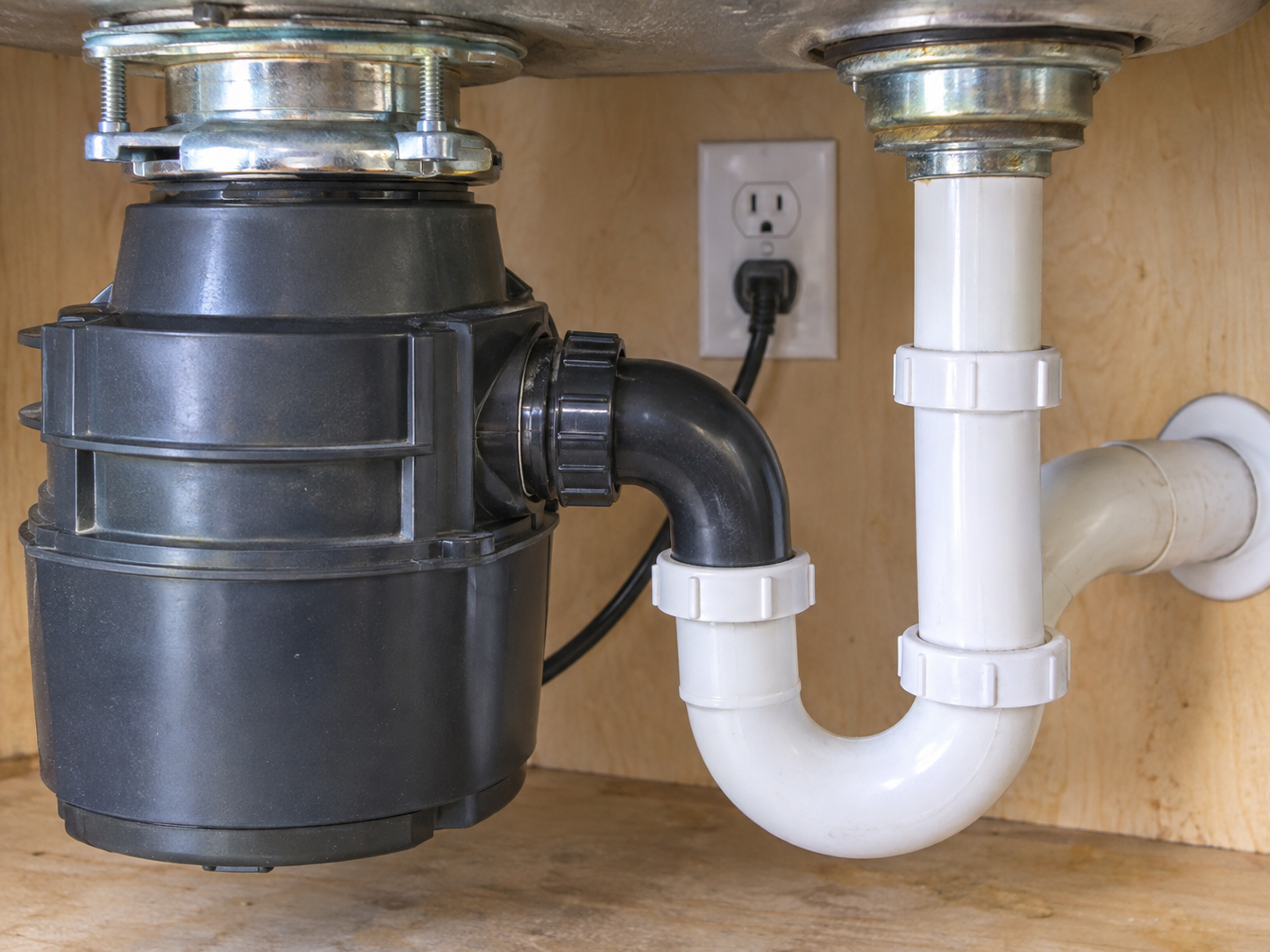
Installing a Garbage Disposal the Right Way
A clean install prevents leaks and slow drains.
- Check that the drain line is clear first.
- Set the trap low enough for good flow.
- Connect the dishwasher hose with a knockout plug removed.
- Add a dedicated outlet or switch under the sink.
The Philadelphia Water Department shares tips on what should never go down city drains.
What Not to Grind
Most clogs come from a few common items.
- Grease, oil and fat.
- Coffee grounds and eggshells.
- Pasta, rice and potato peels.
As a result, run cold water during and after use to flush the line.
Finally, use the unit often. Short daily runs keep the blades clean and stop odors from building up in the chamber.
Frequently Asked Questions
Can I add one to an old rowhome? Usually yes, after we check the drain.
Does it need its own circuit? Often a switched outlet is enough.
How long does one last? About 8 to 12 years.
What if my disposal hums but does not spin? Turn off the power. A jam is likely, and we can clear or replace it.
Book a Disposal Installation
Our licensed plumbers handle kitchen installs across the city. Explore our plumbing services, pipe repair, or contact our team.