
When a kitchen sink drain slows to a crawl or backs up completely in a Philadelphia rowhome, clearing the visible strainer basket rarely solves the whole problem. Across neighborhoods like Fairmount, Point Breeze, Center City, South Philly and Manayunk, kitchen drain lines travel through tight wall framing and older cast-iron or galvanized branch pipes before reaching the main stack.
As homeowners often mention when calling Philadelphia Plumbing Experts for an unexpected kitchen backup, a clog that keeps returning after plunging usually points to buildup deeper in the P-trap, the horizontal wall arm or the vertical stack connection. Knowing where the blockage sits prevents cabinet water damage and protects aging pipes.
This guide explains why a kitchen sink drain backs up in older Philadelphia homes, what a professional plumber checks during a cleanout inspection, and when pipe repair makes more sense than another round of snaking.
Why a Kitchen Sink Drain Clogs Deeper in Older Philadelphia Rowhomes
Unlike bathroom sinks that mostly carry water and hand soap, a kitchen sink drain handles warm cooking fats, food starches, dish detergent and fine coffee grounds every day. In an older Philadelphia rowhome, several structural factors make those deposits build up faster:
- Long horizontal branch runs. Many rowhome kitchens sit near the rear of the first floor. Consequently, the drain pipe must run horizontally along the party wall or basement ceiling before tying into the main soil stack.
- Rough interior walls in older metal pipes. While under-sink traps are often updated to PVC, the pipe inside the wall is frequently original galvanized steel or cast iron. Over decades, internal rust scale catches grease and fibers like Velcro.
- Improperly pitched trap arms. As older rowhome joists settle slightly over time, a horizontal drain arm can lose its downward slope. Standing water in a flat section allows sludge to harden along the bottom of the pipe.
- Undersized or unvented drain connections. Older kitchen island sinks or remodeled galley kitchens sometimes lack proper drain venting, slowing water velocity so solids settle out early.
According to the U.S. Environmental Protection Agency (EPA) WaterSense plumbing maintenance guidelines, addressing minor under-sink leaks, worn slip-joint washers and slow drains early prevents hidden cabinet rot and costly structural water damage.
Why Liquid Drain Cleaners Damage Older Rowhome Pipes
When water stands in both bowls of the sink, reaching for a bottle of caustic liquid drain cleaner is tempting. However, chemical cleaners create serious risks in Philadelphia homes:
- Heat and acid weaken old metal threads. Caustic chemicals generate heat as they react. In older galvanized waste arms or brass traps, that reaction eats through thin, corroded bottom walls.
- Rubber slip-joint washers degrade. Chemical cleaners sit directly in the P-trap bend, softening rubber washers and causing under-sink drips days later.
- Deep grease plugs remain untouched. If the blockage sits six feet inside the wall or down in the basement ceiling elbow, diluted chemical cleaner simply pools above the clog, creating a hazard when the trap has to be opened.
What a Plumber Checks During a Kitchen Sink Drain Inspection
A thorough drain and sewer cleaning inspection looks at the entire pathway from the sink strainer to the basement stack—while protecting your kitchen cabinets and leaving the work area spotless:
- Strainer baskets, tailpieces and garbage disposal discharge. Checking for loose baffle gaskets, jammed disposal impellers or misaligned dishwasher air-gap tees.
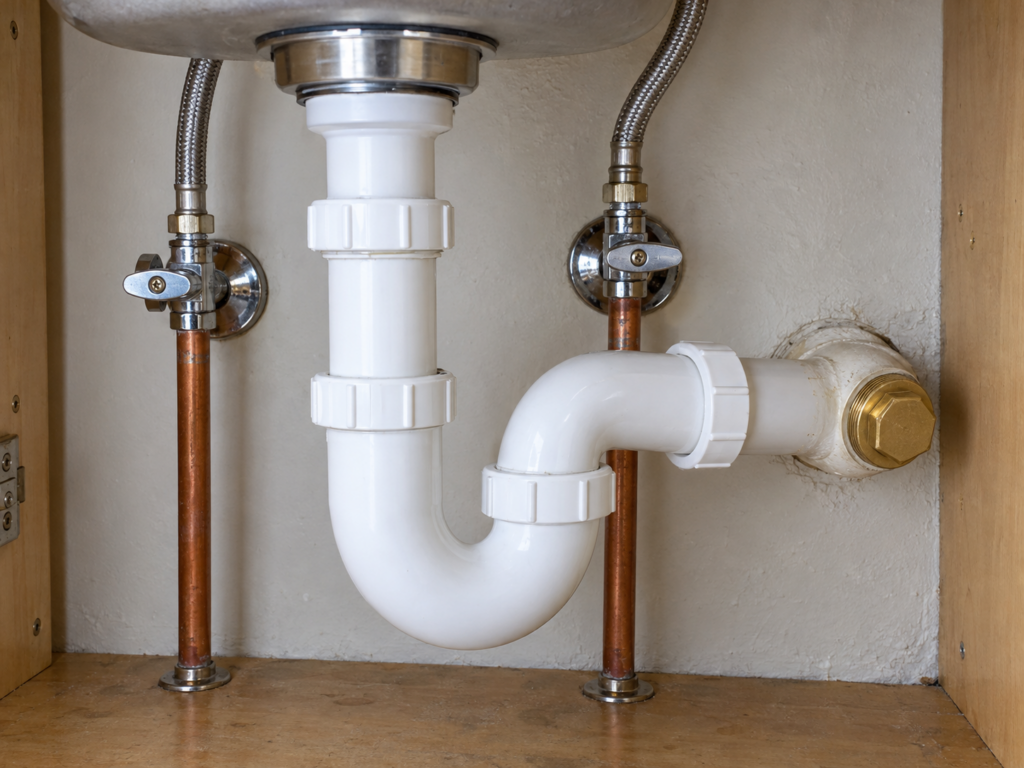
- The under-sink P-trap and slip-joint nuts. Removing and inspecting the trap bend to see whether the clog is localized at the sink or backing up from the wall.
- The wall cleanout plug and horizontal trap arm. Running a professional motorized auger through the wall cleanout to scrape hardened grease scale from the full diameter of the pipe.
- Fixture shutoff valves and supply hoses. Testing both hot and cold angle stops under the sink so you can shut water off immediately in an emergency.
- Basement branch line and stack tie-in. Inspecting the exposed horizontal run in the basement ceiling for weeping joints, rust blisters or improper slope.
Mechanical Drain Cleaning vs. Pipe Section Replacement
Not every recurring kitchen clog needs new piping, and not every slow drain can be solved by snaking alone. A clear diagnosis helps you choose the right fix.
Professional mechanical drain cleaning makes sense when:
- The PVC, copper or cast-iron drain line is structurally sound and properly pitched.
- The backup was caused by grease buildup, food waste or a localized obstruction in the P-trap or branch line.
- A threaded wall cleanout or basement test tee allows full-diameter cable clearing all the way to the main stack.
Replacing the trap assembly or branch pipe makes sense when:
- An old galvanized steel horizontal pipe is choked internally with rust scale, leaving only a pencil-sized opening.
- Thin chrome-plated brass traps or corroded cast-iron elbows show pinhole leaks or green/rusty crust along the bottom.
- The under-sink plumbing has an unvented S-trap or back-pitched tee that traps debris after every use.
When a corroded section needs replacement, our water pipe and drain repair team upgrades the affected run to smooth-walled PVC with an accessible cleanout plug for easy future maintenance.
Warning Signs Your Kitchen Sink Drain Needs Attention
Catching a developing restriction early saves you from an overflowing sink during dinner prep. Watch for these warning signs:
- Water swirls slowly or backs up into the second sink bowl whenever the garbage disposal or dishwasher drains.
- A gurgling sound comes from the kitchen sink drain after water finally empties, signaling a partial blockage or venting issue.
- A sour, musty odor rises from the drain even after cleaning the strainer basket and disposal splash guard.
- Damp wood, warped cabinet flooring or mineral crust appears around the P-trap slip nuts or wall stub-out.
Frequently Asked Questions
Why does my kitchen sink drain clog again a few weeks after I plunge it? Plunging pushes a soft grease plug slightly further down the horizontal pipe without removing the hardened buildup on the pipe walls. Professional cable cleaning scrapes the full inner diameter all the way to the vertical stack.
Why does running the dishwasher make water come up in the kitchen sink? The dishwasher drain hose connects directly above the P-trap or into the garbage disposal. If the pipe past the P-trap is partially blocked, the high-volume pump discharge from the dishwasher backs up into the open sink bowls.
Should I replace an old metal P-trap with PVC? Yes. Thin chrome-plated brass traps corrode from the inside out. Upgrading to a Schedule 40 or heavy-duty tubular PVC P-trap with a nearby cleanout provides a smooth, rust-free connection.
Can you clear a clogged kitchen sink drain without making a mess in my kitchen? Yes. Our plumbers use drop cloths, contain water when opening the trap or wall cleanout, test the line under full flow, and clean up completely before leaving.
Schedule Kitchen Sink Drain Service in Philadelphia
Whether you are dealing with a sudden backup, a recurring slow drain or leaking under-sink pipes, Philadelphia Plumbing Experts provides fast, transparent diagnosis and lasting repairs across Philadelphia and the Main Line. Explore our drain and sewer cleaning services or contact our team today to schedule your visit.