
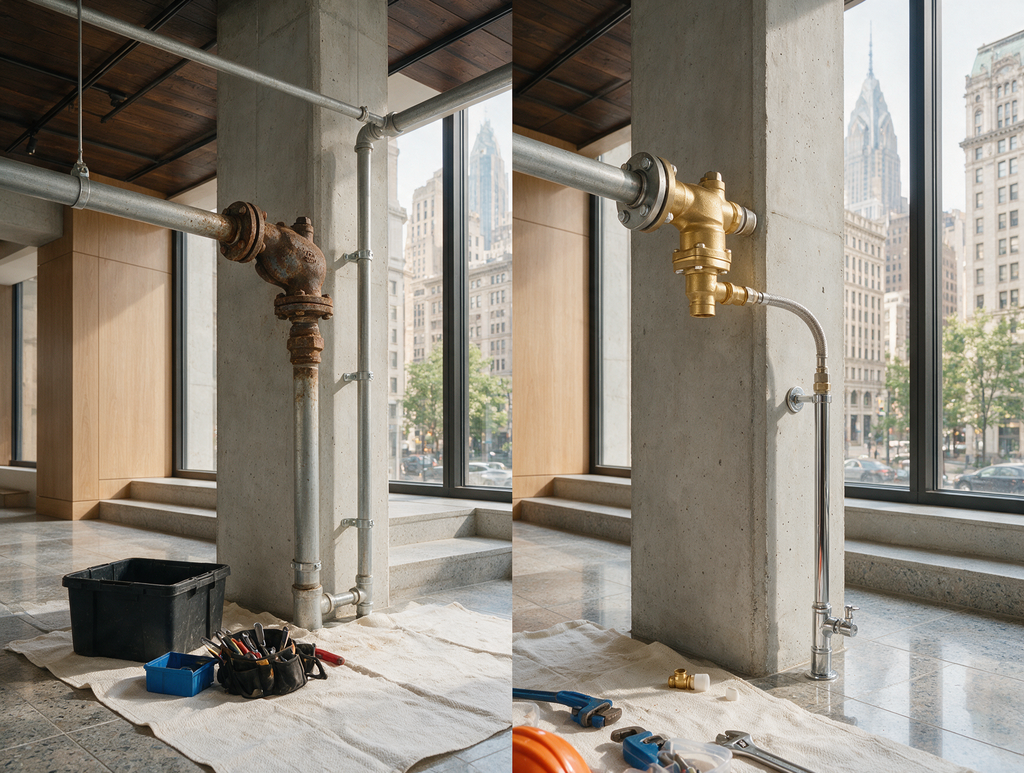
Pressure Reducing Valve (PRV) Replacement in Center City Condos is a practical planning question for property owners in Center City (Philadelphia). The right approach depends on the existing conditions, the way the space or system is used, and how the proposed work interacts with surrounding materials. Understanding those details early helps prevent a cosmetic decision from creating a larger construction, maintenance, or code problem later. That review should happen before demolition, fabrication, or installation begins.
What a PRV Does in a Condo Plumbing System
A pressure-reducing valve lowers higher incoming water pressure to a level suitable for fixtures and interior piping. In a Center City building, pressure may also be influenced by booster systems, elevation, shared risers, and building maintenance equipment. A condo owner should confirm whether the suspected valve serves one unit or belongs to a common building system.
Symptoms Can Point in Opposite Directions
A failing or misadjusted PRV can contribute to banging pipes, dripping relief valves, premature fixture wear, or pressure that changes during the day. Low flow at one faucet may instead result from a clogged aerator, local shutoff, cartridge, or branch restriction. Pressure should be measured under static and flowing conditions before replacing the valve.
Access and Shutoff Planning Matter
PRVs are often located near the unit shutoff, meter, mechanical closet, or riser connection. Tight cabinets and finished walls can complicate replacement. The plumber should identify how water will be isolated, whether the building must participate, and whether unions, expansion control, or nearby valves should be updated while the piping is accessible.
Coordinate with Building Management
Condominium rules may require notice, approved work hours, insurance documents, water shutdown scheduling, and protection of elevators or common areas. A licensed plumber should document the existing pressure, installed valve size, direction of flow, and final setting. Clear coordination helps avoid an unnecessary building-wide interruption for a unit-level repair.
Questions to Resolve Before Work Begins
Before comparing proposals, make sure each contractor is pricing the same boundaries, materials, preparation, protection, access, disposal, and finish restoration. Ask which selections must be finalized before work begins, which conditions remain allowances, and which approvals or inspections can affect the schedule. Product data and drawings should match the written scope. This makes it easier to distinguish a genuinely different construction approach from a price difference created by missing work. Record approved samples, model numbers, colors, profiles, and installation requirements in one selection log. The agreement should also explain change-order authorization, progress documentation, cleanup standards, final inspection, and the information the owner receives for maintenance after the project is complete.
Planning the Next Step
Property owners should compare the visible condition with the broader assembly, confirm any permit or manufacturer requirements that apply, and document the proposed scope before materials are ordered. Guidance from Philadelphia Plumbing Code can help frame the technical questions, while an on-site evaluation determines what is appropriate for the individual property. For diagnosis or installation help, contact Philadelphia Plumbing Experts to discuss the symptoms, the property type, and the plumbing service that fits the situation.
Learn more about Center City plumbing services.
Authoritative external source: Philadelphia Plumbing Code