
Bathroom flooring changes can raise or lower the finished surface around a toilet. If the flange ends up too low, too high, damaged, or poorly supported, the toilet may rock or rely on an over-sized wax seal instead of a solid mechanical installation. For homeowners in Center City, Point Breeze, Ardmore, and Main Line, this is the kind of detail that can decide whether a renovation or repair remains durable after the visible finish is complete.
The primary search intent behind toilet flange height after tile is practical: understand what the condition means, what should be checked before work proceeds, and how to avoid closing the assembly before the real cause is understood. The goal is not to over-complicate the project; it is to make the scope match the condition that is actually present.
Start With the Existing Condition
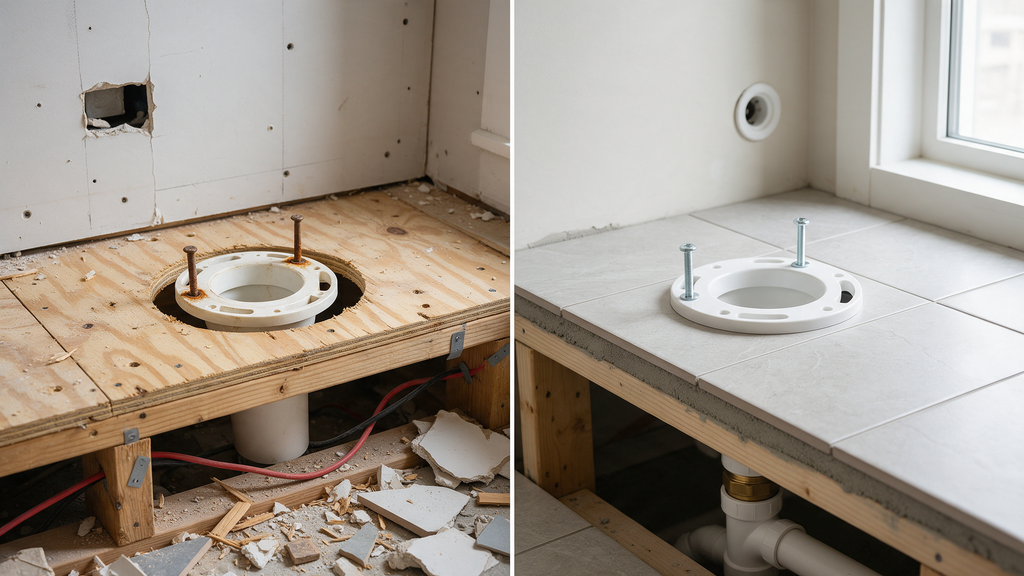
The visible symptom is only one part of the decision. A contractor also needs to understand flange height relative to the finished floor, whether the flange is cracked, corroded, or loose, and how those findings affect the surrounding work. Resolving those questions before finish work protects the new materials and helps keep a localized detail from turning into avoidable rework later.
Field Checks Before Finish Work
A professional review typically includes:
- Flange height relative to the finished floor
- Whether the flange is cracked, corroded, or loose
- Subfloor support around the opening
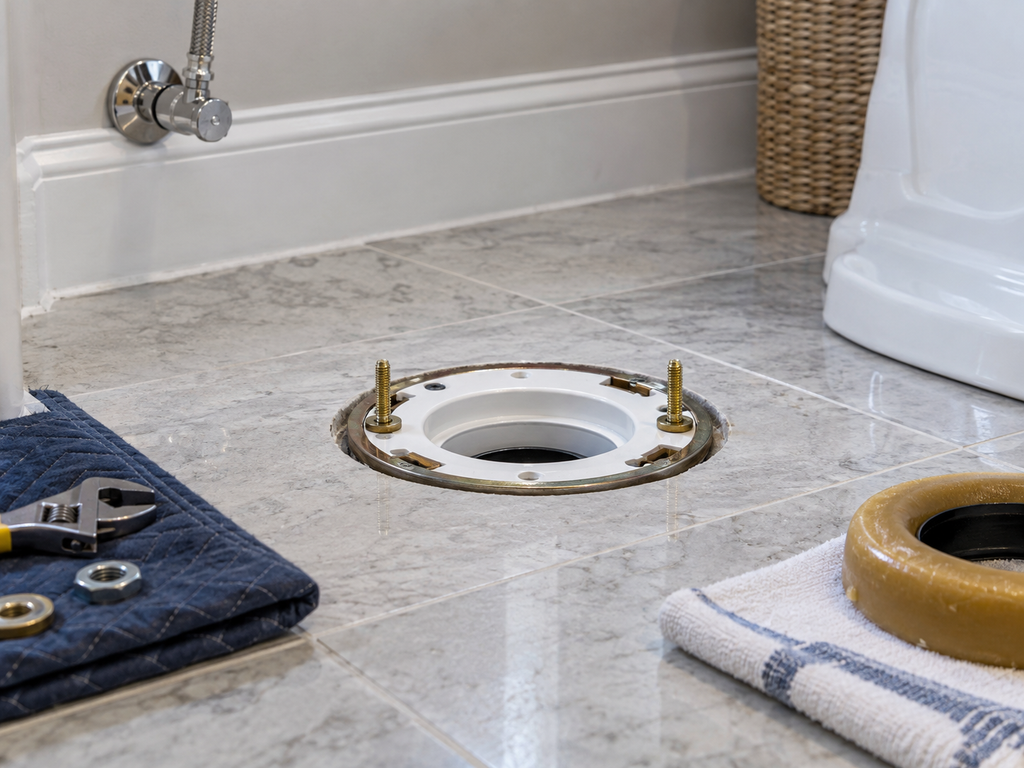
- Condition of the closet bolts and drain connection before resetting the toilet
Coordinating the Next Step
The plumbing detail should be coordinated with the final tile assembly before the toilet is reinstalled. Approved repair rings, flange replacement, or other proper corrections can be selected based on the actual condition rather than stacking seals to compensate for an incorrect elevation. The best result comes from coordinating the hidden construction with the finish requirements so one trade is not forced to undo another trade’s completed work.
This is where a focused commercial service page should receive the strongest internal support. Learn more about plumbing services and how the broader project can be coordinated around the condition described here.
Mistakes That Create Callbacks
Using multiple wax rings as the default fix can mask a flange problem and still allow movement. Setting the toilet before the floor is fully stable can also break the seal later. A strong scope separates a cosmetic correction from work that affects performance, access, drainage, structure, or serviceability.
Know When It Is More Than a Finish Issue
A damaged subfloor, corroded drain connection, or cracked flange should be repaired before the toilet is set and caulked into its final position. That decision should be made before the area is covered, painted, tiled, sided, or otherwise treated as complete.
Reference: Pennsylvania Uniform Construction Code. Requirements and field conditions vary by project, so the applicable authority and project-specific professionals should guide final decisions.
Plan the Next Step
Philadelphia Plumbing Experts can inspect the existing piping and fixtures, identify whether the problem is localized or system-wide, and recommend a repair or installation scope that matches the actual condition.