
A small puddle under the water heater is easy to ignore. However, a relief valve that drips after every shower is a warning sign. In many Philadelphia homes, the fix is a water heater expansion tank working together with a properly set pressure reducing valve.
We see this often in rowhomes in South Philly, Kensington and Germantown. The water heater was replaced, a new valve went on the main line, and suddenly the relief valve starts leaking. The heater is fine. The pressure has nowhere to go.
This guide explains why it happens, how the expansion tank and the PRV work as a team, and what a correct installation looks like.
Why Pressure Builds Inside a Water Heater
Water expands when it is heated. A 50-gallon tank can grow by about half a gallon during one heating cycle. In an open system, that extra water flows back into the city main.
- Closed systems. A PRV, check valve or newer meter stops water from flowing back.
- Pressure spikes. With no room to expand, pressure can climb well above normal.
- Relief valve opens. The temperature and pressure valve releases water to protect the tank.
- Hidden wear. Repeated spikes also stress faucets, toilet valves and supply lines.
How a Water Heater Expansion Tank Works
An expansion tank is a small steel tank with an air chamber and a rubber bladder. As heated water expands, it pushes into the tank instead of raising pressure in the pipes.
- Installed on the cold water line near the water heater.
- Sized to the heater volume and the house pressure.
- Air pre-charge set to match the incoming water pressure.
- Supported with a strap or bracket instead of hanging on the pipe.
The U.S. Department of Energy water heating guide recommends regular water heater maintenance, which includes checking relief valves and pressure components.
The Pressure Reducing Valve: The Other Half of the System
Many Philadelphia homes receive strong pressure from the street. A pressure reducing valve, or PRV, lowers it to a safe level for fixtures. Consequently, the PRV and the expansion tank must be set together.
- A PRV set to a safe household range.
- A pressure gauge to confirm the reading.
- An expansion tank charged to the same pressure as the PRV setting.
- Shutoff valves so each part can be serviced.
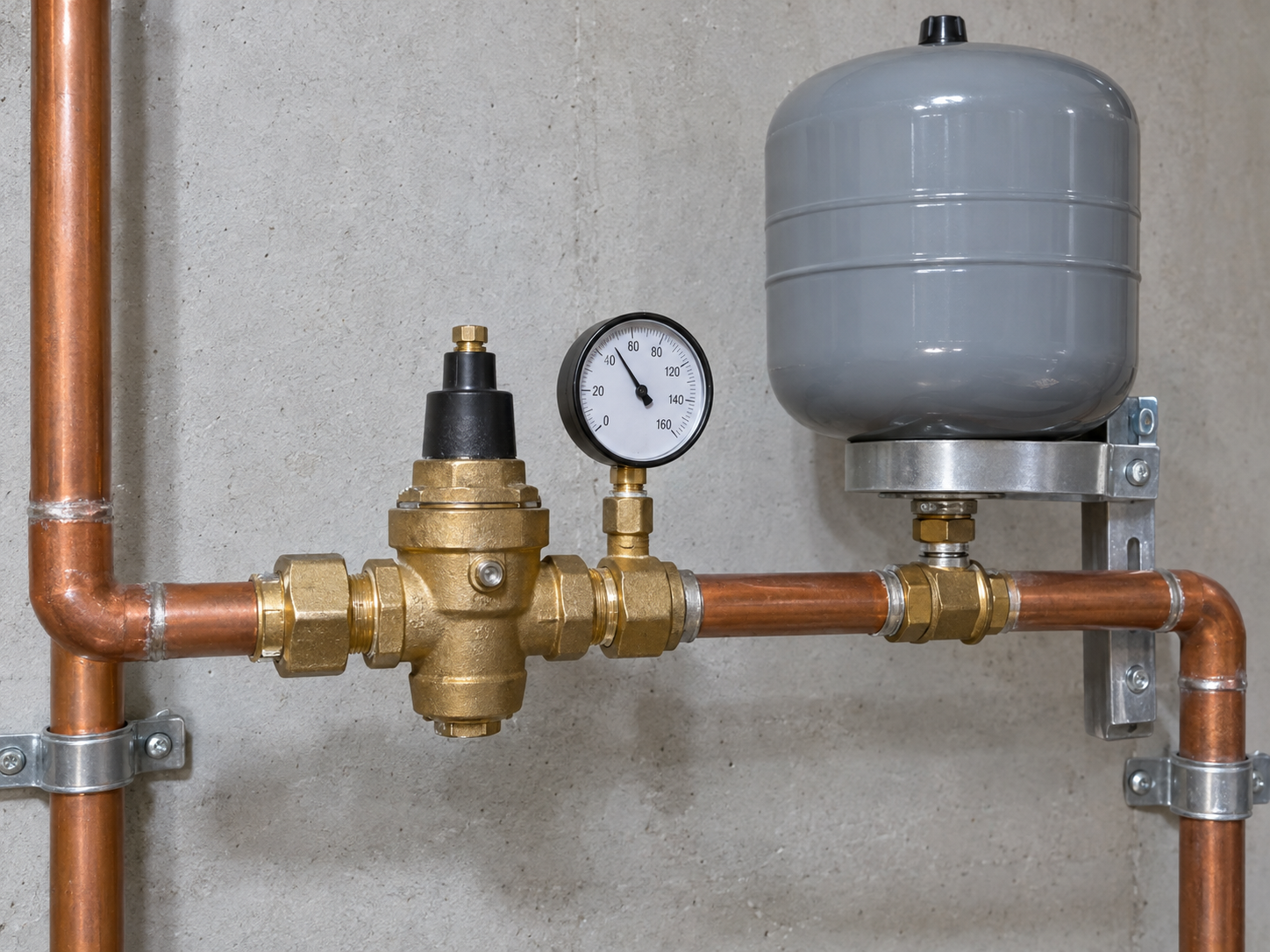
If the tank is charged too high or too low, it fills with water and stops working within months.
Recharge the Tank or Replace It?
A recharge or adjustment may be enough when:
- The tank is newer and holds air.
- The PRV setting simply drifted.
- The relief valve drips only occasionally.
Replacement makes sense when:
- The tank sounds full of water when tapped.
- Water comes out of the air valve.
- The tank or PRV is rusted or over ten years old.
Warning Signs of High Pressure in Your Home
- A water heater relief valve that drips or discharges.
- Toilets that run or refill on their own.
- Banging pipes when faucets shut off.
- Faucets and supply lines that fail early.
A simple pressure test at an outside spigot or laundry faucet tells a plumber a lot. It is a quick check worth doing after any water heater replacement.
Frequently Asked Questions
Is an expansion tank required in Philadelphia? When a home has a closed system, such as a PRV or check valve, codes typically call for thermal expansion control. We check your setup during every water heater installation.
Can I just replace the relief valve? A new relief valve will drip too if pressure is still spiking. The cause needs to be fixed first.
How long does the installation take? Adding or replacing an expansion tank usually takes a few hours, including setting the pressure.
Do tankless heaters need an expansion tank? Sometimes. It depends on the system and the manufacturer instructions.
Fix Water Heater Pressure Problems in Philadelphia
A water heater expansion tank and a well-set PRV protect your heater, fixtures and pipes. Philadelphia Plumbing Repairs installs, tests and adjusts both. Learn more about our Philadelphia plumbing services, our leak detection and pipe repair, or contact our plumbers to schedule a visit.